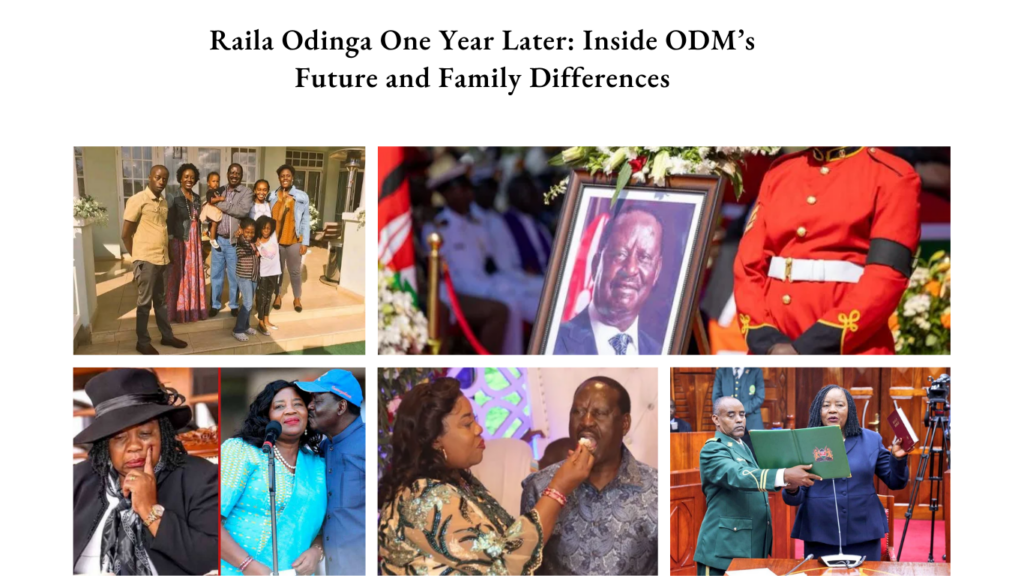
One year after Raila Odinga’s death, his family and ODM are navigating a new political reality as his legacy continues to shape Kenya’s political landscape.
A year after the death of former Prime Minister Raila Amolo Odinga, the questions surrounding his political legacy remain central to the future of the Orange Democratic Movement (ODM), the Odinga family and Kenya’s broader political landscape.
Raila died on October 15, 2025, aged 80, while receiving treatment in India. His death marked the end of a political era shaped by decades of opposition politics, democratic reform campaigns and efforts to influence the direction of the country.
For millions of supporters, he was more than a politician. He was a symbol of resistance, political mobilisation and the struggle for democratic change.
But beyond the tributes and commemorations, his absence has presented difficult questions about succession, party leadership and how the people closest to him will preserve his legacy.
Raila’s Final Journey From India to Bondo
Following his death in India, Raila’s body was returned to Kenya, where thousands of mourners gathered to pay their respects.
His body was taken to Parliament Buildings in Nairobi for public viewing before a state funeral at Nyayo National Stadium on October 17, 2025.
The final journey continued to Kisumu, where more mourners viewed his body before he was laid to rest at his family home in Bondo, Siaya County, on October 19.
The family said the arrangements followed his wish to be buried within 72 hours of his death.
His burial brought to a close a chapter in Kenya’s political history, but it also marked the beginning of a new period for his family and the party he had led for years.
Oburu Oginga Takes Over ODM Leadership
One of the most significant developments following Raila’s death was the transition of leadership within ODM.
His elder brother, Siaya Senator Oburu Oginga, initially took over in an acting capacity before being formally elected party leader on March 27, 2026.
The transition placed Oburu at the centre of efforts to maintain the party’s unity, political influence and organisational strength without its long-serving leader.
However, the period after Raila’s death has also exposed differences over the party’s direction, its political alliances and the role of younger members of the Odinga family.
As ODM looks towards the 2027 General Election, questions about its strategy and identity remain important to its supporters and the wider political establishment.
Raila’s influence over the party was built over many years. The challenge for its current leadership is to determine how much of that political identity can be maintained under new leadership.
Ida Odinga Takes Up a Diplomatic Role
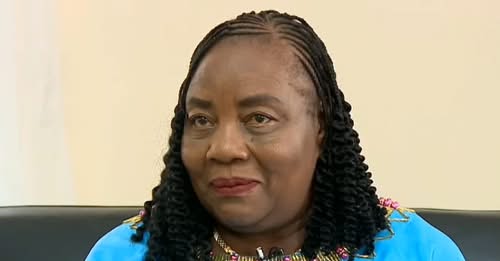
Another major development in the year following Raila’s death was the appointment of his widow, Ida Betty Odinga, to a diplomatic position.
On January 23, 2026, President William Ruto nominated Ida to serve as Kenya’s Ambassador and Permanent Representative to the United Nations Environment Programme (UNEP), headquartered in Nairobi.
The nomination was forwarded to Parliament for consideration and approval, with Ida expected to succeed Ababu Namwamba, who had been reassigned as Kenya’s ambassador to Uganda.
Parliament approved her appointment in February 2026. On April 8, she presented her credentials to the Director-General of the United Nations Office at Nairobi, formally taking up her diplomatic role.
The appointment placed Ida in a new public-service position months after the death of her husband, whose political career had kept the family in the national spotlight for decades.
As Kenya’s representative to UNEP, she is expected to advance the country’s environmental diplomacy and engage with international partners on environmental issues.
The Odinga Family Navigates Life After Raila
Raila’s death also changed the circumstances of a family that had long been closely associated with his political career.
Family members have remained prominent in public discussions about his legacy, with differing views emerging over political strategy, ODM’s direction and the role of the next generation.
These differences have drawn attention to the challenge of separating family relationships from the political responsibilities and interests associated with Raila’s legacy.
For the Odinga family, the anniversary offers an opportunity to remember the late statesman while navigating the responsibilities that come with preserving his name and political heritage.
What Will Raila Odinga’s Legacy Look Like?
Raila’s influence on Kenyan politics extended beyond his leadership of ODM. His political journey was closely linked to campaigns for multiparty democracy, constitutional reform, devolution and changes in the country’s governance.
His supporters continue to associate him with those struggles, while his political career also remains part of wider debates about alliances, power-sharing and the direction of Kenyan politics.
One year after his death, his legacy is being carried forward through different channels: ODM’s political leadership, his family’s public engagements and national commemorations.
The question is no longer whether Raila remains a major figure in Kenya’s political history. It is how his ideas, political influence and longstanding support base will shape the decisions of those who have inherited the responsibility of carrying his legacy forward.
As Kenya marks the first anniversary of his death, the answer will depend not only on the tributes paid to him but also on the political choices made in the years ahead.