
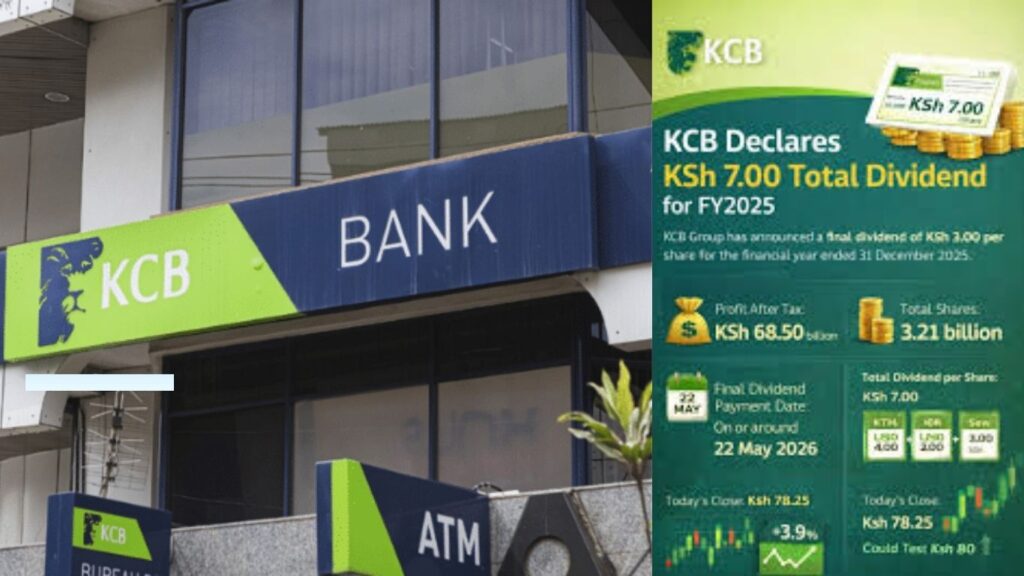
Foreign investors have disposed of 23.6 million shares in KCB Group valued at approximately KSh2.1 billion, as local institutional and individual investors increased their holdings in the Nairobi Securities Exchange-listed bank.
Foreign investors reduced their stake in KCB Group during the three months to September 2026, even as Kenyan investors bought additional shares, according to shareholder data reported by Business Daily.
The foreign shareholding declined from approximately 281.66 million shares in June to 258.04 million shares at the end of September, reducing foreign ownership from about 8.77% to 8.02%.
Based on a share price of KSh90.25, the shares sold were worth approximately KSh2.13 billion.
Kenyan investors absorb foreign share sales
The reduction in foreign ownership was matched by an increase in local shareholding.
Local institutional investors, including investment funds and other large domestic investors, added approximately 19.2 million shares, raising their total holding to about 1.52 billion shares.
Individual Kenyan investors also increased their holdings by approximately 4.43 million shares, bringing their total to about 799.26 million shares.
Combined, the two groups acquired approximately 23.62 million shares, matching the reduction in foreign holdings over the quarter.
The shift means local investors now account for a larger proportion of KCB’s ownership, although the figures alone do not establish why each investor bought or sold.
Why are foreign investors selling?
The latest sales come after a strong run in KCB’s share price. Business Daily reported that the stock gained approximately 30.32% over the six months preceding its October 21 report.
Some investors may have been taking profits after the share-price increase. However, the shareholder figures do not identify individual sellers or establish their reasons for disposing of the shares.
Foreign investors may sell for various reasons, including portfolio rebalancing, changes in global investment conditions, currency considerations or a decision to realise gains. Determining which factors drove this particular transaction would require further evidence.
Is foreign investment leaving Kenya?
KCB’s figures come amid wider debate about foreign participation in Kenya’s equity market.
Foreign investors selling shares does not necessarily mean they have lost confidence in the country. Shares sold on the stock exchange are generally transferred to other investors, and in this case the reported increase in local holdings matched the decline in foreign ownership.
The distinction matters: a change in who owns a company is not the same as the company losing its value or operations moving out of Kenya.
Nevertheless, sustained foreign selling across several major companies could affect market liquidity, share prices and the ability of businesses to attract international capital. The broader market trend must be assessed using data across companies and over time rather than one transaction alone.
What does this mean for Kenyan investors?
The increase in local ownership shows that domestic institutions and individuals can play a significant role in the Nairobi Securities Exchange.
For ordinary investors, however, the figures are not a recommendation to buy or sell KCB shares. Investment decisions require consideration of the bank’s financial performance, valuation, dividends, risks and an investor’s own financial circumstances.
As the market develops, the key questions are whether Kenyan households can participate meaningfully, whether local institutions can mobilise long-term savings responsibly, and whether companies continue to deliver value to shareholders.
The latest KCB shareholding figures offer evidence of a shift towards local ownership. Whether that trend continues will become clearer in subsequent shareholder disclosures.
For now, the central fact is that foreign investors sold a substantial block of KCB shares, while Kenyan investors increased their holdings by a corresponding amount.