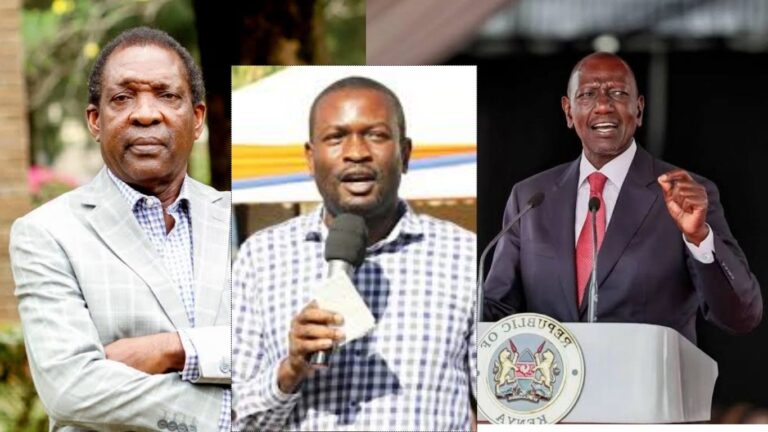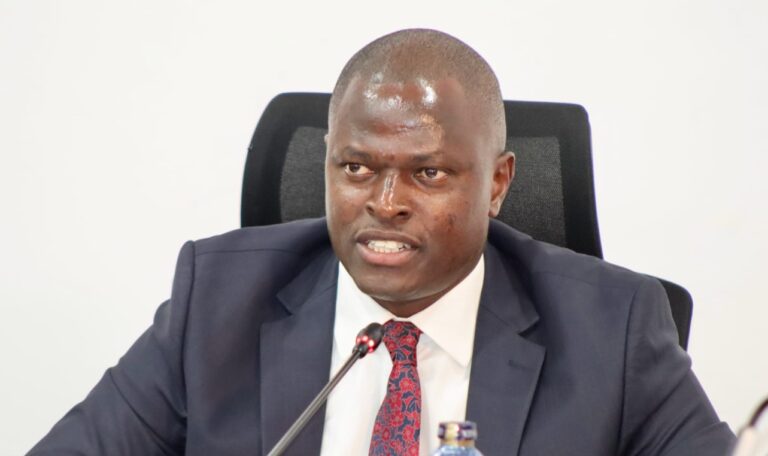
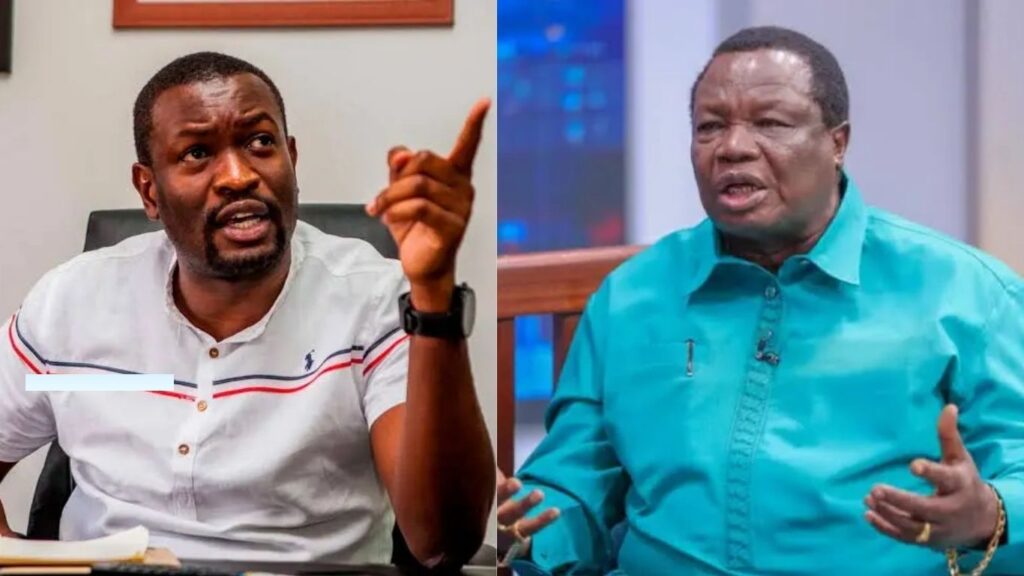
Central Organisation of Trade Unions (COTU) Secretary General Francis Atwoli has once again questioned Nairobi Senator Edwin Sifuna’s readiness for the presidency, sparking fresh questions about why the veteran trade unionist appears uneasy with the senator’s political direction.
Speaking during a funeral service in Kanduyi, Bungoma County, Atwoli warned young politicians against pursuing national leadership without first building strong political networks and support structures.
He took issue with Sifuna’s association with former Deputy President Rigathi Gachagua, popularly linked to Wamunyoro, suggesting that political alliances driven by personal interests could undermine the communities politicians claim to represent.
“Hao watoto wanaokuja katika siasa, wanafanya siasa ya biashara na itaangusha jamii. Msipochunga wanauza nyinyi wholesale,” Atwoli said.
He also recalled previously suggesting that Sifuna could become a leader in the future, but questioned the senator’s current political engagements.
“Juzi mliskia kijana mdogo ambaye sisi tumezaa na mimi nimesema atakuwa kiongozi huko mbele. Anaenda kwa Wamunyoro. Ukipeleka waluhya huko, kabla chakula ifike huko Western itakuwa imeisha. Lazima mfikirie sana ni wapi tunaenda,” Atwoli stated.
Why Is Atwoli Concerned About Sifuna’s Political Choices?
Atwoli’s remarks raise a broader political question: does he disagree with Sifuna’s presidential ambitions, or is he more concerned about the alliances the senator is building ahead of the 2027 General Election?
Sifuna has increasingly become a prominent voice in Kenya’s opposition politics, while Gachagua is seeking to consolidate his own political support following his fallout with President William Ruto.
Gachagua’s role in the political coalition that helped propel Ruto to the presidency in 2022 demonstrates the importance of political networks and regional mobilisation. However, whether the former deputy president can help another politician build a winning national coalition remains to be seen.
Atwoli’s warning also touches on the political influence of Western Kenya, where leaders are likely to face competing appeals from different camps as the 2027 elections approach.
His remarks could therefore be interpreted as a caution to Sifuna about the potential political costs of his alliances. However, it would be premature to conclude that Atwoli is under pressure or is deliberately attempting to dictate whom Sifuna should support without further evidence.
What Does Atwoli Want From Sifuna?
That remains an open question. Atwoli has publicly questioned Sifuna’s readiness for the presidency while warning against his political association with Gachagua.
The disagreement highlights a familiar reality in Kenyan politics: presidential ambitions depend not only on popularity but also on alliances, regional support, party structures and the ability to build a national coalition.
For Sifuna, the challenge is to demonstrate that his political choices can translate into broader national support. For Atwoli, the question is whether his warnings are intended as advice to a younger politician or reflect a deeper disagreement over the direction of Western Kenya’s politics.
As the 2027 General Election approaches, the political contest over who should lead, who should align with whom, and who can command the support of key voting blocs is only likely to intensify.