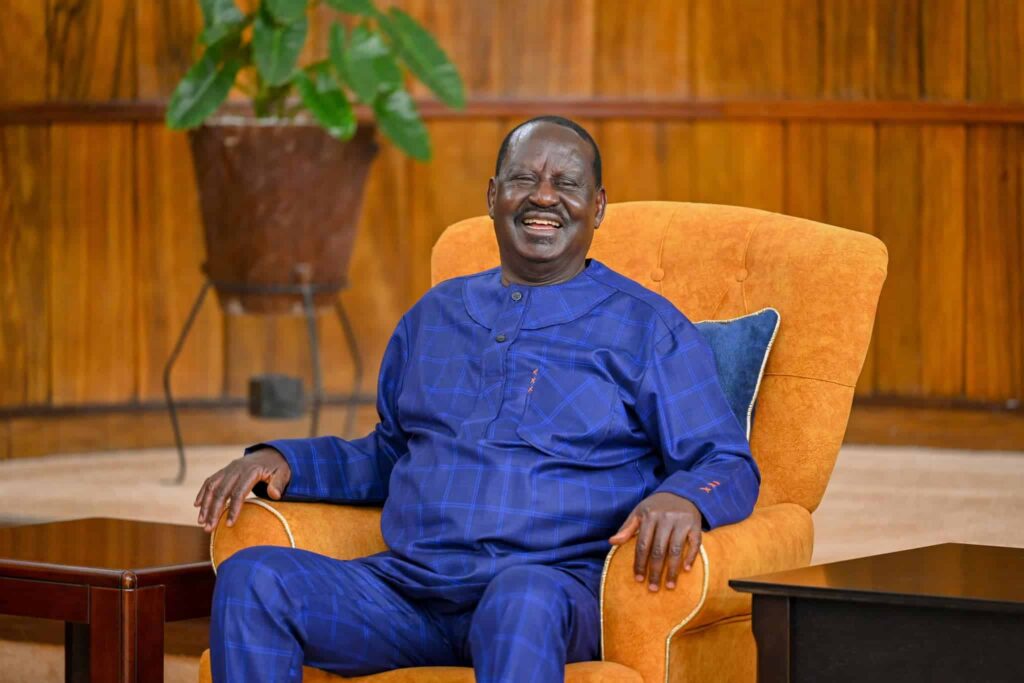
The late former Prime Minister Raila Odinga built a political movement that drew massive crowds, survived years of detention and became one of Kenya’s most influential political figures. But following his death, debate continues over whether the broad-based government reflects the spirit he represented.
A political debate has emerged over the legacy of the late Raila Amolo Odinga, with critics of the broad-based government arguing that his true political spirit cannot be found in the current arrangement.
“Raila Odinga didn’t have to pay people or put them on buses to attend his rallies. The true representation of Raila’s spirit is certainly not in the broad-based government,” is the message at the centre of the debate.
The remarks reflect a wider disagreement over whether Raila’s legacy should be defined primarily by his years in opposition, his fight for democratic reforms or his later decision to work with President William Ruto.
Raila died in India on October 15, 2025, aged 80, after decades at the centre of Kenya’s political life. He never became president despite contesting the office five times, but his influence extended across successive governments.
Early Life: The Son of Jaramogi Oginga Odinga
Raila was born on January 7, 1945, in Maseno, in what was then Nyanza Province. He was the son of Jaramogi Oginga Odinga, Kenya’s first Vice-President after independence, and Mary Juma Odinga.
Growing up in a politically active family exposed him to debates about leadership, governance and the struggle for a more equitable society.
He attended Kisumu Union Primary School and Maranda before travelling to East Germany for further studies. He studied German and later pursued mechanical engineering at the Technical University in Magdeburg, completing his studies in 1970.
Upon returning to Kenya, Raila taught at the University of Nairobi before joining the Kenya Bureau of Standards, where he eventually became deputy director.
His career in public service, however, unfolded during a period of intense political tension under President Daniel arap Moi.
Detention and the Fight for Multiparty Democracy
Raila became a prominent figure in Kenya’s pro-democracy movement during the 1980s, when political opposition operated under severe restrictions.
In 1982, he was arrested in connection with the failed coup attempt against the Moi government and detained without trial for several years. He was detained again after his release as pressure for political reform intensified.
In 1991, he went into exile in Norway before returning to Kenya in 1992 as the country moved towards multiparty politics.
His experiences during this period helped establish his public image as a political reformer willing to challenge the government of the day.
For many supporters, his years in detention became central to the story of his commitment to political freedom. His critics, meanwhile, questioned aspects of his political strategy and his repeated pursuit of the presidency.
Nevertheless, his role in Kenya’s democratic transition became a defining part of his legacy.
From Opposition Leader to Prime Minister
Raila entered Parliament in 1992 after winning the Lang’ata constituency seat under the Forum for the Restoration of Democracy–Kenya.
Over the following years, he moved through different political parties and coalitions, building a national following that extended beyond his traditional political strongholds.
In 2002, he played a key role in bringing opposition forces together behind Mwai Kibaki, helping to end KANU’s decades-long hold on the presidency.
The political relationship later changed, and Raila became Kibaki’s principal challenger in the 2007 presidential election.
The disputed result triggered widespread post-election violence that killed more than 1,000 people and displaced hundreds of thousands. International mediation led by former United Nations Secretary-General Kofi Annan produced a power-sharing agreement.
Raila became Kenya’s Prime Minister in 2008, serving until 2013.
The coalition government was a major turning point in his career: a man who had spent years challenging the state became one of its most senior officeholders.
The Man Behind the Massive Political Rallies
One of Raila’s defining political strengths was his ability to mobilise large crowds and maintain a committed support base over many years.
His rallies became major political events, combining speeches on governance, constitutional reform, economic concerns and the distribution of national resources.
To his supporters, the crowds represented a genuine connection with ordinary Kenyans who believed he spoke for their interests.
His political brand also grew around nicknames such as “Baba” and “Agwambo”, reflecting the personal loyalty and cultural significance associated with his leadership.
The claim that Raila did not need to pay people or transport them to rallies is an expression of that belief in the strength of his grassroots support. However, the statement is a political assessment and should not be treated as a verified claim about every rally he held.
What is well documented is that Raila became one of the most recognisable mass-mobilisation figures in Kenya, with supporters turning out in large numbers during successive election campaigns.
The 2010 Constitution and the Reform Agenda
Raila’s political legacy is also closely linked to the constitutional reforms that reshaped Kenya’s system of government.
The 2010 Constitution introduced a devolved system of government, strengthened the Bill of Rights and established new institutional checks and balances.
Although the reforms resulted from years of contributions by many political leaders, civil society organisations and citizens, Raila was among the prominent political figures associated with the reform process.
He later served as African Union High Representative for Infrastructure Development from 2018 to 2023, extending his public work beyond Kenya.
His career therefore combined opposition politics, coalition-building, executive service and continental diplomacy.
Five Presidential Attempts, One Unfinished Ambition
Raila contested Kenya’s presidency in 1997, 2007, 2013, 2017 and 2022, but never won the office.
His presidential campaigns frequently centred on constitutional reform, electoral integrity, public accountability and economic justice.
The 2017 election was particularly significant: the Supreme Court annulled the presidential result and ordered a fresh election, marking a historic moment in African electoral jurisprudence.
Raila boycotted the repeat poll, maintaining that the electoral process had not been adequately reformed.
In 2022, he ran under the Azimio la Umoja coalition with Martha Karua as his running mate, losing to William Ruto in a closely contested election.
Despite repeated defeats, Raila remained a major political force and continued to influence national debates.
Raila’s Decision to Work With William Ruto
One of the most contested chapters of Raila’s final years was his decision to pursue cooperation with President William Ruto.
On March 7, 2025, Ruto and Raila signed a cooperation framework intended to address national issues, including governance, economic concerns and the implementation of agreed reforms.
Raila defended the arrangement, arguing that cooperation was necessary to safeguard national stability and advance issues of public interest.
His critics viewed the partnership differently, questioning whether working with a government he had previously opposed weakened his position as an opposition leader.
Following his death, that disagreement has continued within Kenya’s political debate.
Supporters of the broad-based arrangement argue that it reflected Raila’s willingness to negotiate and build bridges. Critics say his identity was rooted in challenging those in power and that the arrangement should not automatically be treated as the continuation of his political ideals.
Is the Broad-Based Government the True Representation of Raila’s Spirit?
The latest remarks questioning the broad-based government raise a fundamental question about how Raila’s legacy should be interpreted.
Was his defining principle opposition to those in power, or was it the pursuit of reforms through whichever political arrangement could deliver them?
There is evidence for both interpretations in his political history. Raila spent decades confronting successive governments, but he also entered coalitions, negotiated power-sharing arrangements and defended cooperation with political rivals when he believed it served national interests.
His decision to work with Ruto before his death cannot, by itself, settle the debate over his legacy. Nor does his history in opposition mean every later political partnership was necessarily inconsistent with his principles.
The disagreement is likely to continue as ODM leaders, his family, former allies and younger political figures interpret what his life should mean for Kenya’s future.
A Legacy That Continues Beyond His Death
Raila Odinga’s life spanned Kenya’s post-independence political struggles, the campaign for multiparty democracy, the formation of coalition governments and the implementation of a new constitutional order.
He was a political prisoner, opposition leader, prime minister and continental statesman. To millions, he was also a symbol of persistence and the possibility of challenging established political power.
His legacy remains complex, marked by both political alliances and fierce confrontations, achievements and defeats, and supporters and critics who continue to disagree over his decisions.
Ultimately, the debate over whether the broad-based government represents Raila’s spirit is part of the larger question of how Kenya remembers one of its most consequential political figures.
What remains beyond dispute is that his influence on Kenyan politics endured for decades and that the arguments he helped shape about democracy, leadership, reform and national unity remain relevant after his death.