
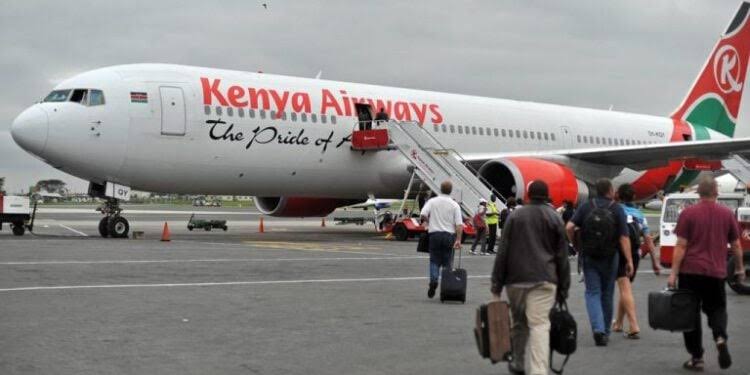
Air travel between Kenya and the Middle East has rebounded despite the ongoing regional conflict, with passenger departures from Nairobi rising sharply as airlines increase capacity to meet renewed demand.
Data from the Kenya National Bureau of Statistics (KNBS) shows that departures from Jomo Kenyatta International Airport (JKIA) to Middle Eastern destinations rose by 16 per cent in July and August 2026, reaching 151,295 passengers compared with 130,156 during the same period in 2025.
The number of passengers arriving in Kenya from the region also increased by 3.8 per cent to 139,175, up from 134,033 a year earlier.
The recovery comes months after the conflict involving Iran, the United States and Israel disrupted aviation across the Middle East, prompting airlines to suspend services, reroute flights and adjust their schedules.
Dubai overtakes London as leading destination
Dubai has emerged as a major destination for travellers departing from Nairobi, with passenger numbers recovering strongly in July and August.
In August alone, 35,994 passengers travelled from JKIA to Dubai, compared with 28,598 who travelled to London during the same month.
The increase highlights the continued importance of the Gulf as a destination for Kenyan workers, business travellers, traders and holidaymakers.
According to Nicanor Sabula, chief executive of the Kenya Association of Travel Agents, travel demand can build up during disruptions as people postpone trips and resume travelling when services become available again.
Dubai and Abu Dhabi have also been promoting tourism and easing some visa restrictions in an effort to attract visitors, further supporting demand.
Airlines increase flights to meet demand
The rise in passenger numbers has encouraged airlines operating between Kenya and the Gulf to expand capacity.
Emirates introduced a third daily flight between Nairobi and Dubai in June 2026 and planned to deploy Airbus A350 aircraft on two of the three daily services.
Kenya Airways also increased its Nairobi-Dubai services to two daily flights from September, while flydubai has continued operating daily flights on the route.
The additional capacity reflects airlines’ response to renewed demand despite continued uncertainty surrounding the regional security situation.
Conflict continues to disrupt global aviation
The recovery in Kenya-Middle East travel contrasts with the difficulties experienced by airlines and airports elsewhere.
The conflict triggered widespread disruption to regional airspace and reduced passenger traffic through major Gulf aviation hubs. Some international airlines have gradually restored services, while others have maintained suspensions or adjusted routes.
The International Air Transport Association reported that passenger demand for Middle Eastern carriers fell by 14.6 per cent year-on-year in August 2026, illustrating the continuing impact of the conflict on airlines in the region.
For Kenya, however, demand for direct travel to Middle Eastern destinations appears to have recovered more quickly than in some other markets.
The increase does not necessarily mean that the security risks have disappeared. Flight schedules and routes remain subject to operational decisions, airspace restrictions and developments in the conflict.
Kenyan workers and traders drive demand
Travel for employment and business is another factor supporting the recovery.
The Middle East remains an important destination for Kenyans seeking employment, while cities such as Dubai serve as commercial centres for traders sourcing goods for the Kenyan market.
Sabula said an increase in the number of Kenyans travelling to the region in search of jobs has contributed to the rise in demand.
The combination of work-related travel, trade, tourism and family visits has helped sustain passenger numbers despite concerns about the conflict.
What the rebound means for Kenya
The increase in passenger traffic is significant for airlines, travel agencies, tourism operators and businesses that depend on connections between Kenya and the Gulf.
More flights can provide travellers with additional options and help businesses maintain important commercial links.
However, the aviation sector continues to face risks from fuel-price volatility, longer flight routes and potential disruptions to regional airspace. Higher operating costs can put pressure on airlines and may eventually affect ticket prices.
For passengers planning to travel, airlines recommend checking flight status directly with the carrier before departure, particularly when travelling through airports affected by regional disruptions.
Kenya’s latest passenger figures suggest that demand for Middle East travel has proved resilient. Whether the recovery continues will depend on the security situation, airline capacity and the willingness of travellers to resume normal journeys.
For now, the figures point to a strong rebound in Kenya-Middle East travel, even as the wider conflict continues to weigh on regional aviation.