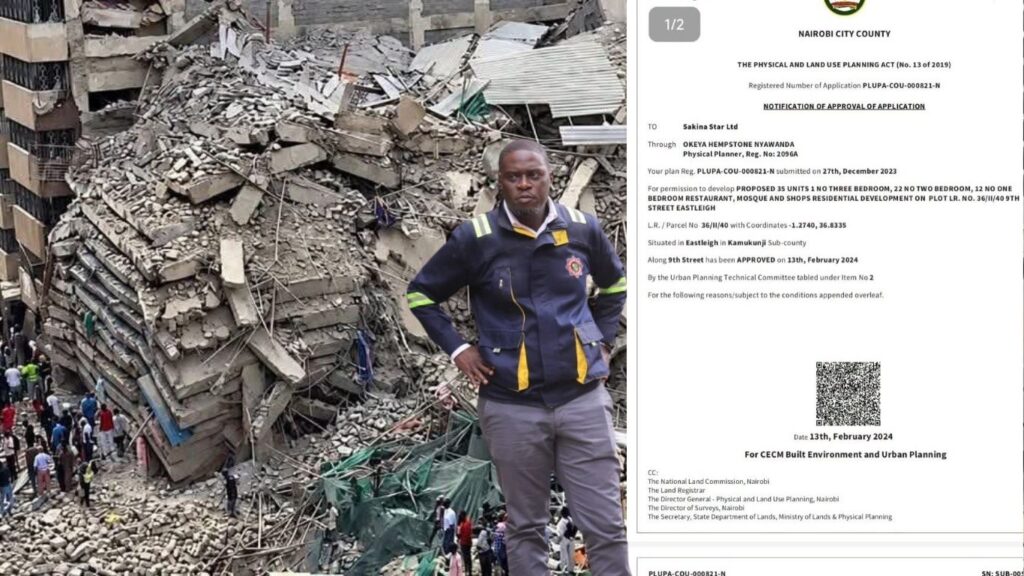
Embakasi East MP Babu Owino has accused Nairobi Governor Johnson Sakaja of misleading Kenyans over the approval status of the building that collapsed in Eastleigh, claiming he has a copy of a county approval dated February 13, 2024.
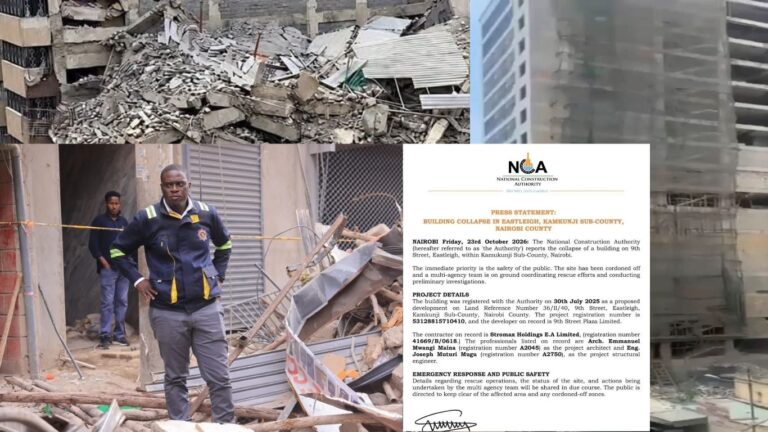
The legislator has demanded accountability following the October 23 collapse of the multi-storey building along 9th Street, Eastleigh, which triggered an emergency rescue operation and raised serious questions about construction safety and regulatory oversight in Nairobi.
In a statement, Babu accused Sakaja of denying that the building had approval despite the existence of a document he says was issued by the county government.
“Sakaja LIED to Kenyans that the building in Eastleigh that collapsed had NO APPROVAL yet He approved the construction,” Babu said.
“I have posted the approval that was done on 13th February, 2024.”
The MP went on to accuse the governor of incompetence and demanded that he take responsibility for the tragedy. He also alleged that a KSh120 million bribe had been collected, but he did not provide publicly verified evidence establishing that the alleged payment was made or linking it to the building approval.
The bribery allegation remains unverified and should not be treated as an established fact.
What Does the County Approval Cover?
The central question is whether the document cited by Babu authorised the construction of the building as it stood before the collapse, or whether it related to a different stage of the development approval process.
Sakaja has offered a different account of the paperwork.
According to reports published on October 24, the governor said Nairobi County approved a change of use from residential to commercial-cum-residential on October 17, 2024. However, he maintained that architectural plans subsequently submitted for the proposed multi-storey development were not approved.
Sakaja said the distinction between permission to change the use of the property and approval of the building plans was critical to understanding how the project proceeded.
The governor also said the county had taken enforcement action after detecting unauthorised construction and that the matter had been referred to relevant authorities for further investigation.
The conflicting accounts have intensified public scrutiny of the county’s development approval system.
Kenya Now has not independently examined or authenticated the document Babu says he possesses. Its exact wording, date, scope and any conditions attached will be important in determining what was authorised.
Questions Over Construction Oversight
The collapse has renewed questions about how a multi-storey building could reach an advanced stage of construction amid disputes over its approval status.
The National Construction Authority’s registration records and the county’s planning documents have also come under scrutiny. Reports indicate that the project’s details were not initially available through the NCA’s online portal but appeared after the collapse, prompting further questions about record-keeping and regulatory oversight.
The NCA has said the project was registered on July 30, 2025. Separately, the county maintains that the later architectural plans were not approved.
These issues require investigation to establish whether the relevant approvals were properly issued, whether construction complied with the applicable requirements and whether any officials or professionals failed in their responsibilities.
The allegations do not, by themselves, establish the cause of the collapse or prove that any individual was criminally responsible.
Calls for Accountability Grow
The political fallout has placed Sakaja and Nairobi County’s planning department under increasing pressure to explain the approval process.
Nairobi MCAs have also questioned the management of the county’s planning department and called for accountability over the tragedy.
Meanwhile, the investigation must establish the roles of the developer, contractors, architects, engineers and relevant public authorities. The immediate priority following the collapse has been the search for people who may have been trapped beneath the rubble.
The document cited by Babu could become an important part of the public debate, but its significance will depend on what it actually approves and whether the relevant authorities can verify its authenticity.
As investigations continue, Kenyans deserve clear answers about the building’s approval history, the enforcement measures taken before the collapse and whether any individual or institution failed to discharge its legal responsibilities.
The key question remains: Was the collapsed building authorised for construction, or was only a change of use approved? The county records and findings of the ongoing investigations will be critical to resolving that dispute.