President William Ruto, retired President Uhuru Kenyatta and several senior Orange Democratic Movement (ODM) leaders missed Raila Odinga’s first death anniversary memorial in Bondo, with reports pointing to disagreements over the event’s programme, political alliances and who should shape the late former prime minister’s legacy.
The memorial was held at Migwena Cultural Grounds in Siaya County on Thursday, October 15, 2026, a year after Raila died in India at the age of 80.
While the gathering was intended to honour Raila’s life and political contribution, the absence of several prominent leaders came amid renewed political exchanges and growing divisions over ODM’s relationship with Ruto’s administration ahead of the 2027 General Election.
1. Why William Ruto Missed Raila’s Memorial
Ruto was on a development tour of Elgeyo Marakwet and Baringo counties on the day of the memorial, where he inspected and launched government projects.
In Baringo, the President commissioned a National Government Constituencies Development Fund office in Eldama Ravine and launched road and electricity projects. In Elgeyo Marakwet, he inspected markets funded through government development programmes.
However, the timing of his tour attracted attention because Ruto had been expected to join Raila’s family and supporters at the anniversary event.
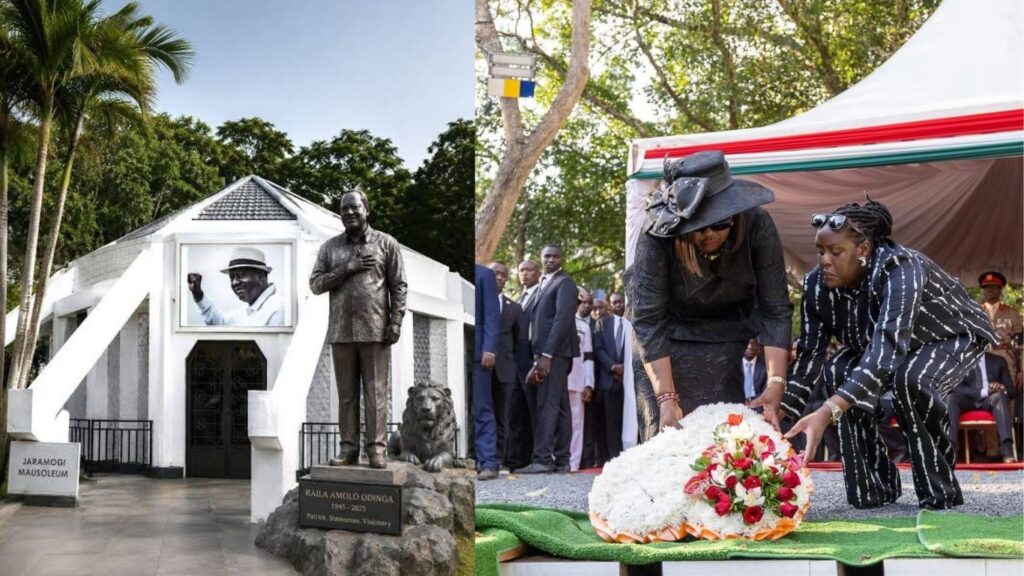
Just eight days earlier, on October 7, the President had visited Kang’o ka Jaramogi to hand over Raila’s mausoleum to the family. His government’s involvement in the construction had been presented by allies as a gesture of respect for the former prime minister.
The President also acknowledged the anniversary through a memorial message on social media.
His absence came as relations between Ruto and Uhuru deteriorated publicly. Ruto had accused his predecessor of supporting opposition activities against his administration, while Uhuru urged the President to concentrate on delivering his promises to Kenyans.
Although Ruto’s development itinerary was publicly reported, there was no confirmed official statement establishing that the political dispute or disagreements over the memorial programme determined his decision not to attend.
2. Why Uhuru Kenyatta Also Stayed Away
Uhuru’s absence was particularly notable because he was reportedly invited to attend the memorial as chief guest.
The retired president has a complicated political history with both Raila and Ruto. He contested against Raila in the 2017 presidential election before backing him in the 2022 General Election, when Raila ran against Ruto.
Uhuru and Ruto, meanwhile, governed together for a decade before falling out during Uhuru’s second term. Their relationship has recently come under renewed strain as they exchange accusations over the direction of Kenyan politics and the opposition’s preparations for 2027.
The renewed dispute raised questions about whether Uhuru’s presence at the memorial would have introduced another political dimension to an already sensitive gathering.
However, reports did not establish that protocol concerns over the invitation were the confirmed reason for his absence. Neither the invitation nor the reported protocol debate, on its own, proves why he chose not to attend.
3. Disagreements Over Who Controlled the Memorial Programme
A report by The Star published on October 16 said sources familiar with the planning described discomfort among some State officials and senior ODM figures over what they perceived as excessive control of the programme by Raila’s family.
According to the report, the family wanted to keep the commemoration focused on Raila’s legacy and prevent any political faction from using the occasion to mobilise support or claim ownership of his legacy.
The invitation of opposition figures, including Nairobi Senator Edwin Sifuna, Embakasi East MP Babu Owino, Wiper leader Kalonzo Musyoka and People’s Liberation Party leader Martha Karua, reportedly contributed to concerns among some government supporters and ODM figures aligned with the broad-based government.
Some of these leaders have been critical of Ruto’s administration and are associated with efforts to build an alternative political front ahead of the 2027 election.
The report also quoted Kileleshwa MCA Robert Alai as saying he and others stayed away because they believed ODM leaders and supporters had been told they were not welcome. That was his account of the decision, rather than a confirmed explanation from every leader who was absent.
Raila’s family, meanwhile, appeared determined to ensure that his political history was not reduced to his final working relationship with Ruto or the current arrangement between ODM and the Kenya Kwanza administration.
4. Why Gladys Wanga and Junet Mohamed Were Missing
ODM chairperson and Homa Bay Governor Gladys Wanga, along with National Assembly Minority Leader Junet Mohamed, were among the notable party figures reported absent from the Bondo gathering.
Their absence attracted attention because both have been associated with ODM’s engagement with Ruto’s administration.
Wanga and other party officials have supported continued cooperation with the government, while leaders associated with the Linda Mwananchi faction have questioned the arrangement and demanded greater accountability.
The contrast became more visible because Sifuna and Siaya Governor James Orengo attended the memorial. Both have criticised aspects of the current political direction and are associated with the party’s more critical voices.
The attendance pattern highlighted the competing positions within ODM: one side favours maintaining cooperation with Ruto, while another argues that the party must preserve its independent political identity and remain willing to challenge the government.
There was no confirmed public explanation establishing why Wanga or Junet individually missed the event, so their absence should not automatically be interpreted as a coordinated boycott.
5. How Raila’s Family Sought to Keep Politics Out of the Event
The family’s approach was influenced in part by earlier controversies surrounding Raila’s funeral and memorial arrangements in October 2025.
At the national memorial service at Nyayo Stadium, opposition leaders Kalonzo Musyoka and Martha Karua were not given an opportunity to address mourners, prompting complaints from some political figures. Kalonzo was later allowed to greet mourners at a subsequent event in Bondo.
Raila’s close ally, Rarieda MP Otiende Amollo, had also warned ahead of the anniversary that the gathering should not become a political contest or an opportunity for politicians to demonstrate their popularity.
According to The Star, the family wanted to avoid a repeat of previous protocol disputes and ensure that leaders from different political camps could honour Raila without being excluded because of their positions.
That objective, however, proved difficult to separate from the political significance of the guests invited and the speeches delivered.
6. Opiyo Wandayi’s Appearance Brought the 2027 Debate Into Focus
Energy Cabinet Secretary Opiyo Wandayi was the most prominent government representative reported at the event.
According to The Star, Wandayi rallied the gathering behind Ruto’s re-election bid, bringing the 2027 political contest into a ceremony the family had sought to keep focused on Raila’s life and legacy. ODM Deputy Party Leader Simba Arati also spoke before opposition figures addressed the gathering.
The presence of government representatives and the attendance of opposition figures underscored the challenge of organising a memorial for a leader whose political relationships had crossed party lines.
Raila had spent much of his career challenging successive governments, but his later cooperation with Ruto also became a significant part of his final political chapter.
As a result, different political camps continue to draw different lessons from his legacy.
7. The Bigger Question: Who Will Shape ODM After Raila?
Beyond the attendance list, the memorial exposed a wider question facing ODM following the death of its long-serving leader: who will determine the party’s political direction?
Raila had held together competing interests within the party for decades. Since his death, ODM has faced disagreements over leadership, cooperation with the government and the role of his family in decisions about the party’s future.
His sister Ruth Odinga had previously criticised unnamed party figures whom she accused of trying to exploit the anniversary for political survival. At the anniversary gathering, she said she could leave ODM if doing so became necessary to defend the ideals Raila championed.
Meanwhile, Raila’s daughter Winnie Odinga announced her intention to contest the Nairobi Senate seat in 2027, adding another political development to the anniversary.
The family’s invitation of leaders from different camps suggested an effort to preserve Raila’s broader political legacy rather than associate it exclusively with the current ODM-government partnership.
The absences of Ruto, Uhuru, Wanga and Junet therefore became part of a wider conversation about political alliances, protocol and the future of ODM.
.