The death of veteran journalist Kitavi Mutua after a venomous snakebite has sparked renewed debate about the dangers of delaying medical treatment and the difficult decisions families face when medical emergencies collide with deeply held beliefs.
Mutua, a former Nation Media Group correspondent based in Kitui, died on Friday, October 30, 2026, while receiving treatment at Kenyatta University Teaching, Referral and Research Hospital (KUTRRH).
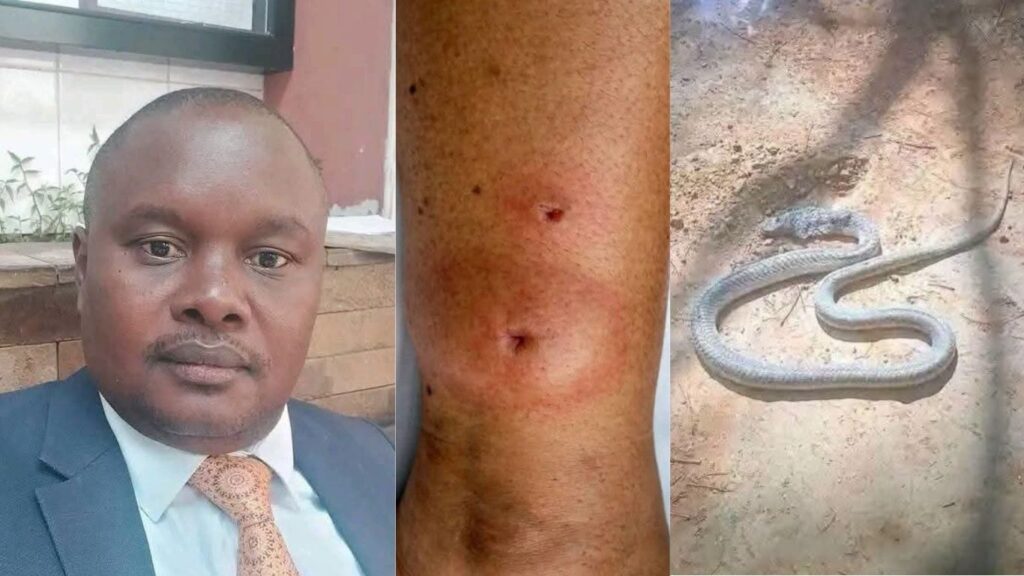
He had reportedly been bitten by a red spitting cobra at his home in Kitui South before his condition deteriorated and he was transferred to the Nairobi-based facility for specialised treatment.
A Journalist Who Reported on Snakebites
Mutua spent years covering issues affecting Kitui and the wider Ukambani region, including politics, health, climate change, devolution and snake-related dangers.
His death has drawn particular attention because he had written about the threat posed by snakes in the region, helping bring public attention to a danger that continues to affect communities.
A commentary shared by This Is Laikipia highlighted the painful contrast between Mutua’s professional knowledge of snakebites and the outcome of his own encounter with a venomous snake.
The writer argued that knowing the dangers of snake venom is not always enough to ensure that people seek treatment promptly when an emergency happens to them or someone close to them.
Questions About Delayed Treatment
The commentary also raised concerns about reports that Mutua spent days at home before receiving hospital care, questioning whether faith and reliance on prayer may have influenced decisions about seeking treatment.
However, the specific claims about the role of religious beliefs and the circumstances surrounding the delay have not been independently established by the reports reviewed. They should not be treated as confirmed explanations for his death.
According to Daily Nation, Mutua was initially admitted to Kitui County Referral Hospital. His condition failed to improve, prompting his transfer to KUTRRH. Family spokesperson Faith Kithele said his kidneys, liver and lungs had failed and that doctors attempted to resuscitate him three times after cardiac arrest. The family also disclosed that he had diabetes, which complicated his condition. <Cite refs={[“turn686224search1″,”turn686224search15”]}/>
Why Snakebite Treatment Cannot Wait
Snakebite envenoming is a medical emergency. The effects depend on the snake species, the amount of venom injected and the victim’s condition, but severe envenoming can cause life-threatening complications.
Anyone bitten by a snake should seek emergency medical care immediately rather than waiting for symptoms to worsen or relying on prayer or other remedies alone. The person should be kept as still as possible while help is arranged. The wound should not be cut or sucked, and a tight tourniquet should not be applied.
Faith and medical care do not have to be mutually exclusive. People can pray while also seeking urgent treatment from qualified medical professionals.
A Wider Public Health Concern
Mutua’s death has also renewed attention to the challenges of responding to snakebites in rural areas, where distance to suitable facilities and access to appropriate treatment can be critical.
The tragedy leaves a painful reminder that professional knowledge, public awareness and good intentions cannot replace timely emergency care.
For many who have reflected on his death, the question is not whether people should have faith, but how communities can ensure that faith does not prevent anyone from receiving potentially lifesaving medical treatment.
Mutua is being remembered for his journalism and his contribution to telling the stories of Kitui and the wider Ukambani region. His death has also brought renewed urgency to conversations about snakebite awareness, access to treatment and the importance of acting quickly when medical emergencies occur.