
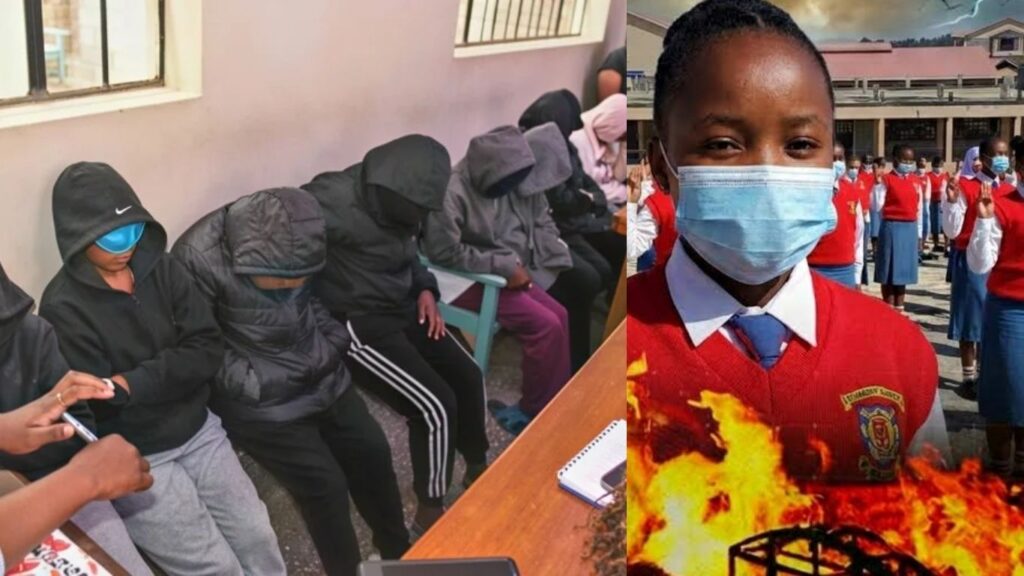
Two of the eight minors charged over the deaths of 16 students at Utumishi Girls Academy have initiated efforts to negotiate plea bargains with the Office of the Director of Public Prosecutions (ODPP), weeks after the court denied them bail.
The development emerged on Monday, October 26, 2026, during proceedings before High Court Judge Diana Kavedza at Kibera Law Courts, where lawyers representing two of the accused children informed the court that they wanted to pursue negotiations with the prosecution.
The case stems from a devastating dormitory fire at Utumishi Girls Academy in Gilgil, Nakuru County, on the night of May 27–28, 2026, which claimed the lives of 16 students and left 79 others injured.
Two Minors Approach the Prosecution
During the court session, lawyer Odiero Osiemo, representing Subject Minor 3, told the court that he had formally submitted a plea-bargaining request to the ODPP.
State Counsel Linda Ndambiri confirmed that the prosecution had received the application and disclosed that preliminary discussions had already taken place.
However, she said further consultations with the child were necessary, as the minor’s parents had indicated that they needed more time to obtain proper instructions before proceeding.
Separately, lawyer P.K. Nganga, representing Subject Minor 7, informed the court that he had written to the ODPP seeking plea-bargaining negotiations after consulting the child’s parents.
The prosecution, however, said it had not yet formally received that second request.
The two applications therefore remain at different stages, and no plea agreement has been announced.
Other Six Minors Yet to Decide
Lawyers representing the other six minors told the court that they were still consulting their clients and their parents before deciding whether to pursue similar negotiations.
Some defence lawyers asked the court to set a hearing date to prevent delays in a case involving children.
Justice Kavedza urged the parties seeking plea bargains to move swiftly and establish whether negotiations would proceed or the case would move towards trial.
The judge did not fix a trial date, noting that her diary was full for the remainder of the year.
Court Allows More Visits by Parents
The court allowed the parents of all eight minors to have two enhanced visits per month at Kamae Borstal Institution, where the children are being held.
The visits are intended to facilitate consultations between the minors, their parents and their lawyers as they consider the proposed plea-bargaining process.
The parents were directed to coordinate the visits with the institution.
The court also directed that the minors continue with their education while in custody.
Children’s officer Hilda Mbatha informed the court that the eight students were attending classes and were expected to sit their second-term examinations the following week.
Justice Kavedza directed that their studies continue without interruption.
The case is scheduled for a mention on November 11, 2026, when the court is expected to receive an update on the progress of the plea-bargaining discussions.
What Plea Bargaining Means for the Case
Plea bargaining is a legal process through which the prosecution and an accused person negotiate a possible resolution of a criminal case, subject to applicable legal requirements and the court’s approval.
Depending on the circumstances and the law, negotiations may involve an agreed plea to a charge and other proposed terms. Any agreement must go through the required legal process.
In this case, requesting negotiations does not mean that either minor has pleaded guilty. It also does not mean that an agreement has been reached or accepted by the court.
The eight minors face 16 counts of murder in connection with the deaths of their fellow students. They pleaded not guilty when they were charged in July 2026, and their identities remain protected because they are children.
The next court mention will provide an opportunity to establish whether the two requests have progressed and whether any of the other accused children intend to pursue similar negotiations.
For now, the case remains before the court, and the allegations must be determined through the applicable legal process.