
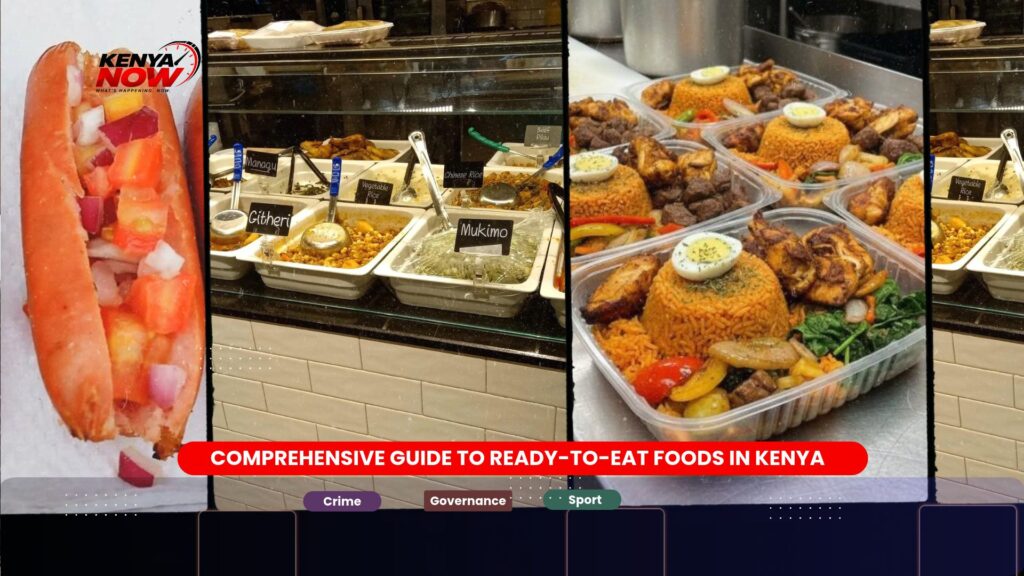
From roadside smokies and boiled eggs to supermarket meal boxes, packaged salads and traditional Kenyan dishes, ready-to-eat foods are becoming an increasingly visible part of Kenya’s food economy. But behind the convenience lies a bigger conversation about food safety, nutrition, affordability and business opportunities.
Kenya’s food industry is experiencing a gradual shift as more consumers embrace meals and snacks that require little or no preparation before consumption.
In busy towns and cities, workers are grabbing lunch from takeaway outlets, students are purchasing affordable snacks, travellers are buying food along highways, while supermarkets are expanding their selections of packaged and prepared products.
The trend, commonly associated with ready-to-eat (RTE) foods, is changing how people access food, particularly in urban areas where time, convenience and affordability influence everyday purchasing decisions.
From a KSh 50 snack at a roadside kiosk to a packaged meal purchased from a supermarket, ready-to-eat foods have become part of the daily routine for many Kenyans.
What exactly are ready-to-eat foods?
Ready-to-eat foods are products that have been prepared, processed, cooked or packaged so that consumers can eat them directly without undergoing additional cooking.
They include freshly prepared meals, cooked meat, sandwiches, salads, fruit portions, bakery products, dairy products and packaged snacks.
Some products are consumed immediately after purchase, while others require refrigeration or reheating according to the manufacturer’s instructions.
In Kenya, the category extends beyond modern supermarket products to include traditional foods that have been part of the country’s street food culture for decades.
Smokies, boiled eggs, mutura, roasted maize, samosas, chapati, mandazi and takeaway meals are among the familiar examples.
The Kenyan foods driving the ready-to-eat market
One of the most recognisable parts of Kenya’s ready-to-eat food culture is street food.
In towns such as Nairobi, Mombasa, Kisumu, Nakuru, Eldoret and Thika, roadside vendors serve customers looking for quick and relatively affordable meals.
Smokies and boiled eggs, often accompanied by kachumbari, remain familiar choices among consumers.
Other popular products include roasted maize, chips, bhajia, sausages, samosas, chapati and mutura.
Traditional prepared meals also occupy a significant space in the market.
Githeri, pilau, ugali and sukuma wiki, rice and beef stew, mukimo, beans and chapati are commonly sold through restaurants, food kiosks, hotels and takeaway establishments.
Meanwhile, supermarkets and convenience outlets offer packaged sandwiches, ready-made salads, cooked chicken, pastries, yoghurt, fruit cups and other chilled products.
The growing variety gives consumers options across different budgets and eating preferences.
Why more Kenyans are embracing ready-to-eat foods
Convenience is one of the biggest factors influencing the popularity of ready-to-eat meals.
For employees working long hours, preparing lunch at home may not always be practical. Students also need accessible meals, while travellers often depend on food outlets along major transport routes.
Urbanisation and changing working patterns have further increased the importance of prepared meals.
Affordability is another consideration.
While packaged supermarket meals may target middle-income and higher-income consumers, roadside food vendors provide alternatives for customers working with smaller budgets.
The expansion of takeaway services and digital food ordering has also created additional ways for consumers to access prepared meals.
For food businesses, these changing habits present an opportunity to reach customers who value convenience without necessarily wanting to spend heavily on restaurant dining.
Food safety: The hidden risk behind convenience
Despite the growing popularity of ready-to-eat foods, food safety remains one of the industry’s biggest concerns.
Unlike raw ingredients that are expected to undergo cooking before consumption, ready-to-eat products are often eaten directly.
This means contamination during preparation, handling, storage or transportation can expose consumers to harmful microorganisms.
Poor hand hygiene, contaminated water, dirty utensils, uncovered food, pests and improper refrigeration are among the factors that can compromise food safety.
Cross-contamination can also occur when raw meat, vegetables and cooked products are handled using the same equipment without proper cleaning.
Some ready-to-eat products, particularly meat, dairy products, salads and cut fruits, require careful temperature control.
Food handlers must observe appropriate hygiene practices, while businesses should ensure that food is protected from dust, flies and other sources of contamination.
The World Health Organization recommends keeping clean, separating raw and cooked foods, cooking thoroughly, maintaining safe temperatures and using safe water and raw materials.
Kenya strengthens attention on street food safety
Food safety has increasingly attracted attention from public health authorities as street food vending continues to provide livelihoods and affordable meals.
In May 2025, Nairobi County introduced a food safety training manual targeting street food vendors.
The initiative focused on improving food handling, preparation, storage, hygiene and compliance with relevant public health requirements.
The move highlighted the importance of supporting informal food businesses with practical knowledge and training rather than focusing exclusively on enforcement.
Research on street-vended foods in Kenya has also raised concerns about microbial contamination in some sampled products, reinforcing the need for better hygiene and food safety controls.
What the law requires from food businesses
Operating a ready-to-eat food business in Kenya involves more than preparing meals and finding customers.
Food premises must comply with applicable public health, food hygiene and county licensing requirements.
Businesses manufacturing or selling packaged products must also consider relevant Kenya Bureau of Standards requirements.
One important reference is Kenya Standard KS 2966:2022, which addresses specifications for pre-packaged ready-to-eat foods intended for direct consumption.
Depending on the nature of the business, operators may need to meet requirements relating to food premises inspections, food handlers’ medical certification, hygiene, packaging, product labelling and applicable certification.
County governments, public health authorities and KEBS play important roles in the regulatory framework.
Entrepreneurs should establish the exact requirements applicable to their products and operating locations before commencing business.
The business opportunities attracting entrepreneurs
Beyond consumer convenience, ready-to-eat foods represent an opportunity for small businesses, manufacturers, restaurants and food distributors.
Entrepreneurs can develop businesses around prepared traditional meals, office lunch deliveries, packaged snacks, fruit cups, fresh salads and takeaway meat products.
One promising area is the packaging of traditional Kenyan meals into convenient portions.
Githeri, pilau, mukimo, chapati and beans, rice and beef stew can be prepared for customers who want familiar meals without spending time cooking.
Another opportunity lies in supplying workplaces and institutions.
Offices, schools, hospitals and event organisers may require regular food supplies, creating potential long-term customer relationships for businesses that can maintain consistent quality and meet the relevant safety requirements.
Supermarket partnerships also offer opportunities for properly equipped local food manufacturers.
However, entrepreneurs must account for ingredient costs, packaging, refrigeration, transportation, labour, licensing and the short shelf life of many fresh products.
The challenge of balancing affordability and quality
One of the industry’s biggest challenges is delivering affordable meals without compromising safety and quality.
Food businesses operate under pressure from rising ingredient costs, electricity expenses, packaging prices and competition.
For smaller vendors, access to refrigeration, clean water and suitable food storage facilities can be particularly difficult.
Freshly prepared food also has a limited shelf life, making proper stock management essential.
Businesses that fail to manage these challenges risk food wastage, customer complaints and potentially serious public health consequences.
Building consumer confidence therefore requires more than attractive packaging or competitive prices.
Clean preparation areas, reliable suppliers, trained staff and proper storage procedures are essential components of a sustainable food business.
Are ready-to-eat foods healthy?
Not necessarily.
The nutritional value of ready-to-eat food depends on its ingredients, preparation methods, portion sizes and processing.
Boiled eggs, fresh fruits, vegetable salads, beans, githeri and grilled chicken can contribute useful nutrients to a balanced diet.
On the other hand, excessive consumption of deep-fried foods, heavily salted snacks, processed meats and sugary products may increase dietary health risks.
Consumers should pay attention to ingredients, nutritional information, allergens and portion sizes where this information is available.
Convenience should not come at the expense of a balanced diet.
What does the future hold for Kenya’s ready-to-eat food industry?
The sector has room for further development as food businesses respond to changing consumer expectations.
Healthier convenience meals, improved packaging, better refrigeration, online food ordering and stronger distribution systems could create opportunities for local entrepreneurs.
There is also potential to develop Kenyan traditional foods into professionally packaged products for supermarkets, offices, institutions and other markets.
However, the industry’s long-term growth will depend on whether businesses can combine affordability, food safety, quality and consumer trust.
For consumers, the message is equally important: a convenient meal is only worth buying if it is safe to eat.