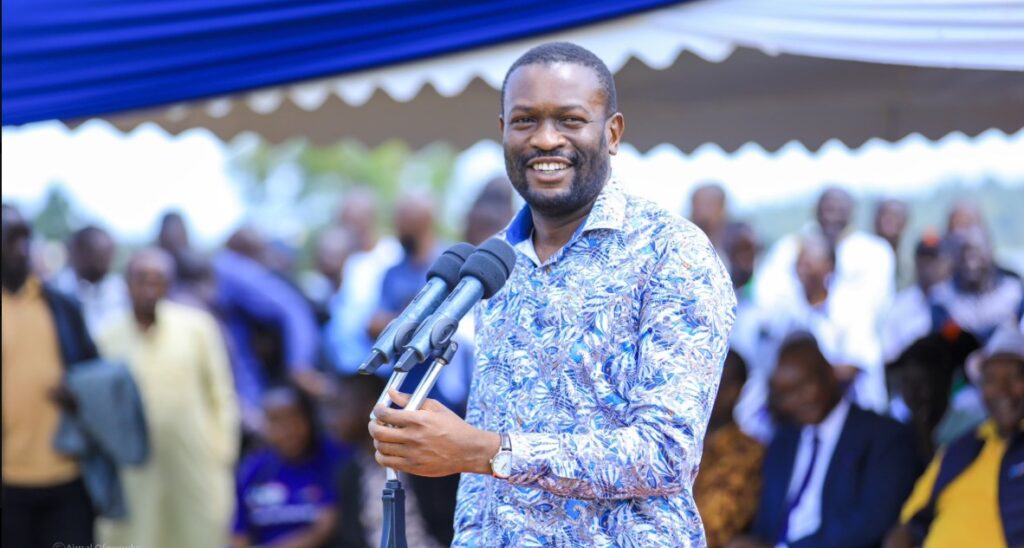
Edwin Sifuna’s journey to the presidency has entered a new phase after the Nairobi senator declared that he will challenge President William Ruto in the 2027 General Election. From his early career as a lawyer to his rise within ODM and the emergence of the Linda Mwananchi movement, Sifuna is now seeking to turn his national political profile into a presidential campaign.
Nairobi Senator Edwin Watenya Sifuna has officially thrown his hat into the 2027 presidential race, setting the stage for a political contest that could test whether a leader whose career has largely been built within opposition politics can assemble a nationwide movement capable of competing for State House.
Speaking during a church service in Donholm, Nairobi, Sifuna dismissed concerns about his age, political experience and financial resources, saying he believes he can overcome the challenges ahead.
“For now, I am receiving a lot of pressure from Kenyans to vie for the presidency. People are asking, ‘huyu Sifuna mnaita rais, how will it happen?’ They say I am young and have no money. But I know God’s guidance will lead me. I will be the first one-term senator to become president,” he said.
The declaration marks a shift from months of speculation about his political ambitions to a direct commitment to appear on the ballot in 2027.
But Sifuna’s journey to the presidency did not begin with the announcement. It has been shaped by his legal career, unsuccessful election bids, leadership within the Orange Democratic Movement (ODM), internal party disagreements and the creation of a new political platform.
Who is Edwin Sifuna?
Born on May 22, 1982, in Kakamega County, Sifuna grew up in a working-class family. His father worked with the defunct municipal council, while his mother was a teacher.
He attended Kakamega Township Primary School before joining Musingu High School. He later pursued a Bachelor of Laws degree at the University of Nairobi, graduating in 2006, and obtained a postgraduate diploma from the Kenya School of Law in 2007.
Sifuna was admitted to the Roll of Advocates in 2008, beginning a professional journey that would later intersect with politics and public service.
His legal background became an important part of his public identity. As he entered political circles, he developed a reputation for direct communication, especially when defending opposition positions and challenging government decisions.
Before becoming an elected leader, Sifuna participated in the technical and advisory structures of the Coalition for Reforms and Democracy (CORD) and later the National Super Alliance (NASA).
These experiences placed him within opposition politics and helped establish his connections with leaders and political organisations that would shape his subsequent career.
The 2017 elections: Sifuna’s first major political test
Sifuna’s first major attempt to secure an elective position came during the 2017 General Election period.
He initially sought the ODM ticket to contest the Kanduyi parliamentary seat but lost the party primaries to John Makali.
He later entered the contest for Nairobi senator, where he finished second to Johnson Sakaja.
Although he did not win, the campaign gave Sifuna a wider public profile and demonstrated his willingness to contest competitive political seats.
His performance in Nairobi helped position him for a different kind of political responsibility: leadership within one of Kenya’s major opposition parties.
The 2017 experience also provides an important part of his political story. His presidential ambitions are not his first attempt to move into elective leadership, but the next stage of a career that has included both electoral defeat and subsequent political advancement.
How Sifuna rose to become ODM secretary-general
In February 2018, Sifuna was appointed secretary-general of ODM, succeeding Ababu Namwamba.
The position placed him at the centre of the party’s organisation, communication and political mobilisation.
As secretary-general, he became a prominent defender of ODM’s positions in public statements, interviews and political debates. His role brought him into regular contact with party leaders, elected representatives and grassroots supporters.
The position also gave him a platform beyond Nairobi, allowing him to participate in national political discussions and become more widely recognised by the public.
For several years, the ODM office was a defining part of Sifuna’s political identity.
However, his eventual fallout with the party leadership would become a turning point, forcing him to pursue a political future outside the organisation in which he had built much of his national profile.
Winning the Nairobi Senate seat in 2022
Sifuna returned to the ballot during the 2022 General Election, again contesting the Nairobi senatorial seat.
This time, he won.
He secured 716,876 votes, becoming Nairobi senator and moving from party administration into elected office.
The victory gave him an independent electoral mandate and a platform from which to participate in parliamentary debates, oversight and representation of Nairobi residents.
The Senate position remains central to his political journey. His latest presidential declaration is particularly notable because he is seeking the country’s highest office after serving one term as senator, rather than building a longer record in elective positions such as governor or member of parliament.
Sifuna has himself highlighted that distinction, saying he wants to become the first one-term senator to rise to the presidency.
Whether voters will view his experience as sufficient will be one of the questions facing his campaign.
The fallout with ODM that changed his political direction
Sifuna’s relationship with ODM leadership deteriorated in 2026 amid internal party disagreements.
The party’s National Executive Committee moved to remove him as secretary-general in February. Following subsequent party processes, the Office of the Registrar of Political Parties formally recognised his removal in July. Sifuna’s exit from the position marked a major break from the political organisation that had helped build his national profile.
The dispute unfolded against wider disagreements within ODM over its political direction and relationship with President William Ruto’s administration.
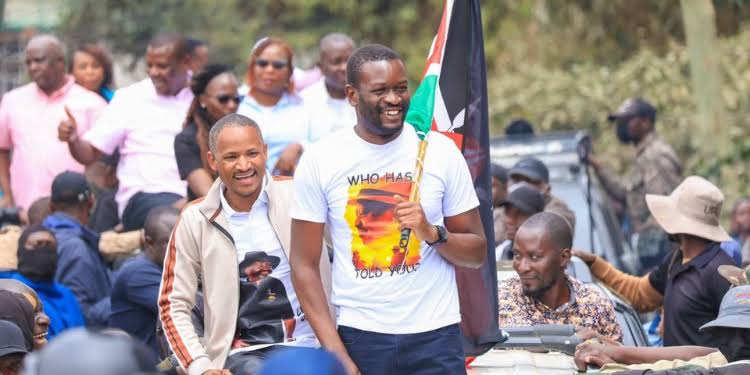
Sifuna became associated with the Linda Mwananchi faction, whose leaders and supporters called for a different approach to opposition politics.
His allies continued to mobilise around the movement, holding public rallies and promoting a political message focused on ordinary citizens, accountability and a change in leadership.
By July, Sifuna was openly discussing the possibility of seeking the presidency, although he initially said the final decision should follow nationwide consultations and a collective assessment of the movement’s support.
The fallout with ODM therefore did more than end his tenure as secretary-general. It accelerated the question of whether he could build an independent political base beyond the party structures that had previously supported his rise.
Linda Mwananchi becomes the vehicle for his ambitions
In October 2026, Sifuna and his allies unveiled The Equitable Party as a political vehicle for their wider ambitions.
The party was presented as a platform through which the Linda Mwananchi movement could participate in the 2027 General Election.
The political outfit subsequently began the process of changing its name to Linda Mwananchi Movement.
On October 13, the Registrar of Political Parties confirmed that the office had reviewed the relevant documents and initiated the formal gazettement process for the proposed change. The party was required to follow the statutory procedure, including addressing any public representations after the prescribed period. The process should therefore not be confused with confirmation that every legal step had been completed.
The development gives Sifuna a potential organisational platform for his presidential campaign.
However, having a political party name and a recognised leadership structure is only one part of a national campaign. The movement must also develop structures across counties, organise supporters, recruit candidates, mobilise resources and comply with electoral requirements.
Sifuna’s challenge will be to translate the public attention surrounding Linda Mwananchi into a durable political organisation.
Why Sifuna says he can become president
Sifuna’s latest declaration reflects his confidence that public support can overcome concerns about his experience and financial resources.
His supporters have presented Linda Mwananchi as an alternative political platform, with its messaging centred on the concerns of ordinary Kenyans.
But a presidential campaign requires more than visibility and strong speeches.
Sifuna will need to demonstrate that his support extends beyond his existing political base, persuade voters in different regions and social groups, and present a clear policy programme addressing issues such as employment, the cost of living, healthcare, education, public debt and accountability.
He will also need to build an effective campaign organisation and identify how the movement intends to compete nationally.
His call for opposition unity recognises another major factor in the race. Any attempt to challenge an incumbent president will unfold within a wider political field, where opposition parties and leaders must decide whether to cooperate, field separate candidates or negotiate a common platform.
Sifuna has expressed confidence in his own prospects, but the extent of his nationwide support will have to be tested through political organisation, public engagement and, ultimately, the electoral process.
The road to 2027: Can Sifuna build a national campaign?
With the next General Election approaching, Sifuna’s campaign faces a series of practical tests.
First is the task of expanding Linda Mwananchi’s presence across all 47 counties. A strong following at rallies and on social media can generate attention, but a presidential campaign also requires local organisation, voter mobilisation and credible candidates at different levels.
Second is the question of resources. Sifuna has acknowledged concerns about his financial muscle. Running a national campaign requires funding for travel, communication, personnel, compliance and election-day operations. He will need to show how the movement plans to finance those activities transparently and sustainably.
Third is the challenge of opposition unity. Sifuna has called for opposition leaders to work together, but unity depends on negotiations over candidates, policy priorities and the distribution of political responsibilities. The movement must establish whether it can work with other opposition formations while maintaining its own identity.
Finally, he will have to convince voters that his experience as a lawyer, former ODM secretary-general and Nairobi senator prepares him for the responsibilities of the presidency.
These questions will help determine the scale and shape of his campaign, but they do not settle its outcome.
What happens next in Sifuna’s presidential journey?
Sifuna’s declaration puts his presidential ambitions firmly in the public arena. His next steps will include strengthening his political vehicle, broadening his support base, working with like-minded leaders and preparing for the legal and organisational demands of the 2027 election.
His political story has already included a failed parliamentary primary, an unsuccessful Senate bid, a rise to senior party leadership, an eventual break with ODM and the creation of a new political platform.
The presidency would be the most consequential test of that journey.
For now, Sifuna has made his intention clear: he wants to challenge William Ruto in 2027 and believes his political movement can gain the support required to compete.
Whether he can turn that ambition into a successful nationwide campaign remains to be seen. The next phase will depend on the organisation he builds, the alliances he secures, the policies he presents and the decision Kenyan voters make at the ballot.